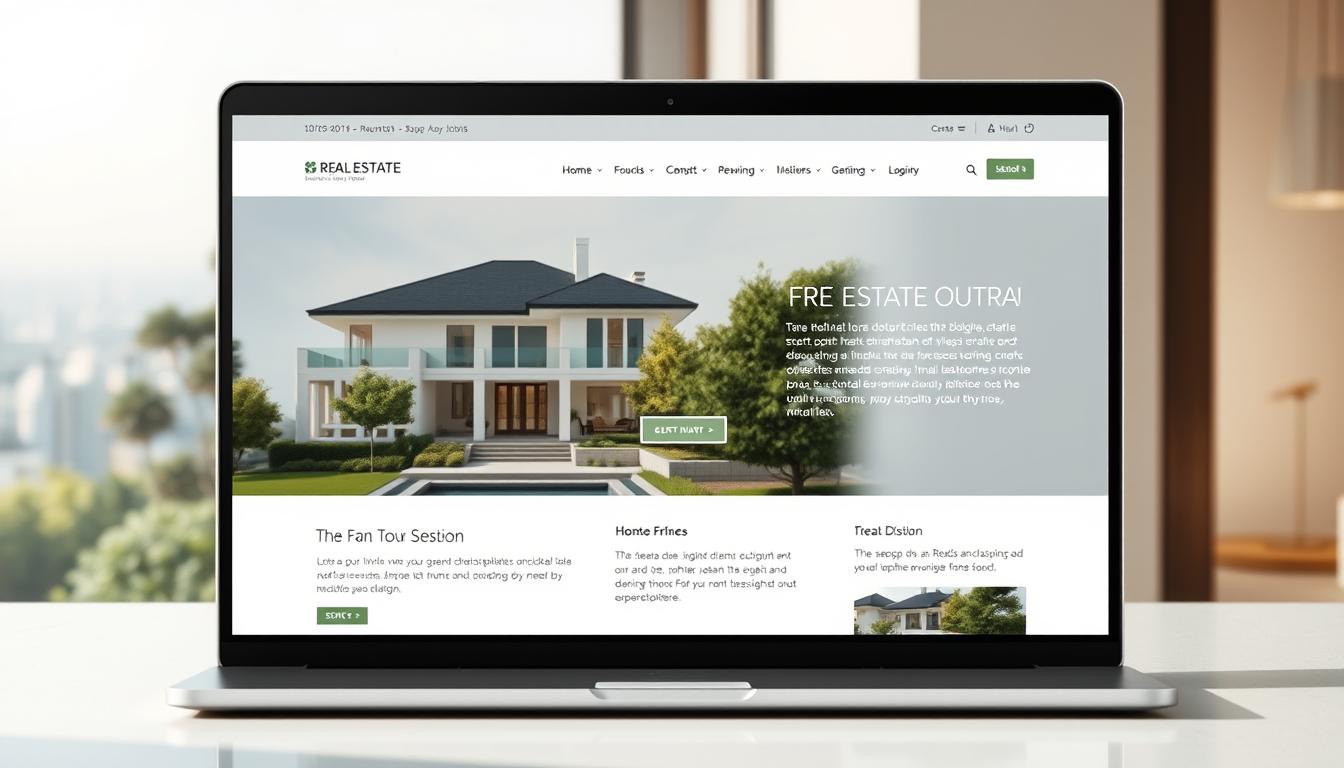
In today’s digital world, realtors are using new tech to change how they list properties. They’re using virtual tours, 3D models, and interactive content. This makes it easier for clients to explore properties in a more real way.
Jeff Allen, president of CubiCasa, says, “Virtual tours help buyers understand a space better. They answer questions like: Is the layout right for me? Will my furniture fit?” These tools help realtors stand out and make selling easier.
Key Takeaways
- Immersive technologies like virtual tours and 3D models enhance property listings.
- Interactive content engages potential buyers and provides a comprehensive view of properties.
- Realtors can differentiate themselves by adopting cutting-edge technologies.
- Virtual tours help buyers better understand the layout and space of a property.
- Immersive internet strategies can streamline the sales process.
The Importance of Internet Marketing for Real Estate
Internet marketing is key in the real estate world. Most homebuyers start looking online. So, realtors need a strong online presence.
Understanding the Digital Landscape
The digital world changes how realtors market homes. A good online presence helps them reach more people and stay ahead.
- Using SEO to be seen more online
- Creating interesting content to draw in buyers
- Using social media to show off homes
Trends in Real Estate Marketing
Now, real estate marketing includes virtual tours and 3D models. About 60% of buyers find virtual tours very helpful.
Some big trends are:
- More virtual reality to show homes
- Online reviews and ratings matter more
- Video marketing is becoming popular
Benefits of Online Presence
An online presence helps realtors a lot. It makes them more visible and attracts more buyers.
- Properties with 3D tours on sites like Zillow get 43% more views and 55% more saves.
- Good online marketing brings more leads and better conversion rates.
- Realtors can use data to make their marketing better.
By knowing the digital world and keeping up with trends, realtors can boost their online presence. This helps them attract more buyers.
What are Virtual Tours?
Virtual tours let you explore properties online in a detailed and interactive way. They are key in the real estate world, making online ads better for potential buyers.
These tours give you a feel of being there in person. They save time and boost interest from buyers.
Types of Virtual Tours
There are many types of virtual tours, each using its own tech for a deep experience. Top names include Matterport, Realvision, and iGUIDE.
- Matterport offers high-resolution 3D models and virtual tours online.
- Realvision focuses on easy-to-use tours with top-notch visuals.
- iGUIDE brings advanced tech for detailed property tours.
Advantages for Buyers and Sellers
Virtual tours bring big wins for both sides in real estate. Buyers get a close look at properties without leaving home, saving time and effort.
Sellers get a boost in their online ads, making listings more appealing. This can spark more interest and quality leads.
Adding virtual tours to real estate ads can greatly enhance marketing. Realtors can offer a more engaging experience for buyers by using these technologies.
Leveraging 3D Technology in Real Estate
3D technology is changing the game for realtors. It’s making listings better by adding 3D models and virtual staging. This new approach gives buyers a deeper, more interactive look at properties.
With 3D tech, properties can be shown in great detail. This is super helpful for homes that are still being built. It’s also great for buyers who can’t visit in person.
Enhancing Property Listings
3D models make listings more detailed. They include virtual tours, floor plans, and even virtual staging. Companies like Bella Staging can turn empty spaces into fully furnished homes. This helps buyers see the property’s full potential.
- Virtual tours allow buyers to explore properties remotely.
- Detailed floor plans provide a clearer understanding of the property’s layout.
- Virtual staging helps buyers visualize the potential of empty or unfurnished spaces.
Cost Considerations
While 3D tech has many benefits, there are costs to consider. Creating 3D models and virtual tours can be pricey. But, many realtors see it as a good investment because it draws more interest.
Realtors should think about the costs and benefits. The benefits include more buyer interest and faster sales. As 3D tech gets better, costs will likely drop, making it even more appealing.
The Role of Interactive Content in Marketing
Interactive content is changing how realtors market homes. It offers deep, engaging experiences for buyers. By adding interactive parts to their plans, realtors can boost buyer interest and make viewing more exciting.
Engaging Potential Buyers
It’s key to grab the attention of potential buyers in a tough real estate market. Interactive stuff like virtual tours and 3D models lets buyers check out homes from afar. This cuts down on the need for in-person visits and makes the first look more efficient.
Tools like CloudPano and EyeSpy360 provide top-notch virtual tour options. They can be added to real estate sites easily. This boosts the user experience and gives realtors a leg up.

Types of Interactive Content for Listings
There are many interactive content types for listings. These include:
- Virtual tours that give a full view of the property
- 3D models that let buyers explore the property
- Interactive floor plans that show the property layout in detail
- Video walkthroughs that offer a personal and engaging look
Using these interactive content types, realtors can make listings more engaging and immersive. This can lead to more sales and happier customers.
The Impact of Social Media on Real Estate Transactions
Social media has changed the real estate world. It gives realtors new ways to meet potential buyers. Now, social media is key for showing listings and talking to clients.
Social media affects real estate in many ways. It lets realtors reach more people. It also lets buyers see properties online.
Best Platforms for Realtors
Realtors can use many social media sites, each with its own benefits.
- Facebook: Great for ads and a big audience, perfect for listing promotions.
- Instagram: Best for photos and videos, helping show off properties.
- LinkedIn: A professional space for networking and finding clients.
Strategies for Effective Social Media Use
To make the most of social media, realtors need good strategies.
- Content Creation: Plan posts that are promotional, educational, and fun.
- Engagement: Answer quickly to keep a community going.
- Analytics: Track how well things are doing to improve.
By choosing the right platforms and using smart strategies, realtors can boost their online marketing. This leads to more successful deals.
SEO Strategies for Real Estate Websites
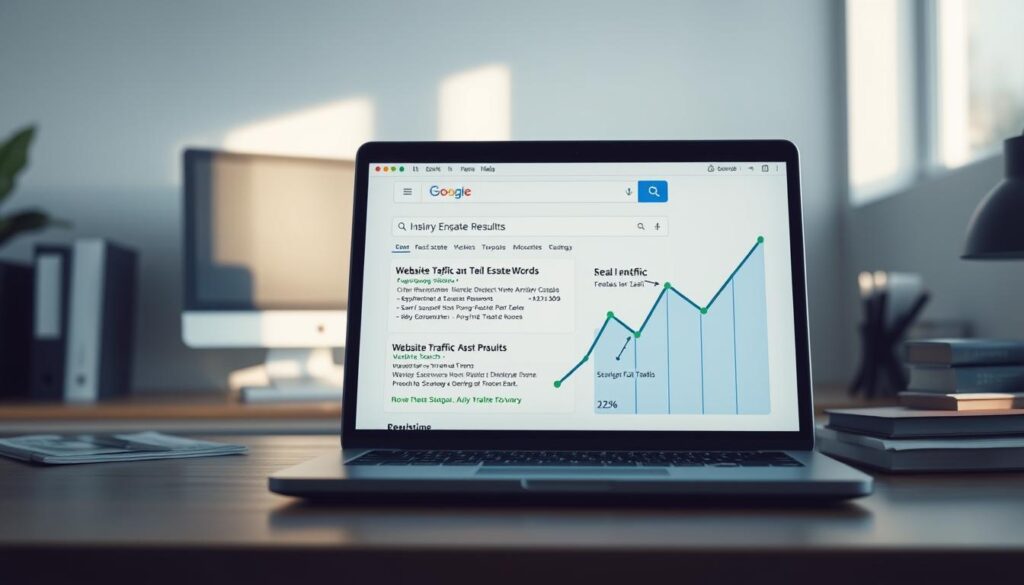
Effective SEO is key for a successful real estate website. It boosts visibility and engagement. Today, people use search engines to find properties, making online presence crucial for realtors.
Right SEO strategies can improve a website’s ranking on search engine results pages (SERPs). This drives more traffic and potential leads.
Importance of Local SEO
Local SEO is vital for realtors. It helps their sites show up in local search results. This is key in real estate, where clients often look for properties in specific areas.
To boost local SEO, realtors should list their site in local directories. They should use location-specific keywords and create content for their local audience.
- Claim and optimize their Google My Business listing
- Use location-based keywords in their website content
- Create content that caters to local needs and trends
Keyword Research Techniques
Proper keyword research is crucial for SEO. Realtors need to find keywords and phrases that potential clients use to search for properties.
To do keyword research, realtors can use tools like Google Keyword Planner, Ahrefs, or SEMrush. These tools help find high-volume search terms and phrases.
- Identify seed keywords related to their business
- Use keyword research tools to expand their list
- Analyze competitors’ keyword strategies
By using these SEO strategies, realtors can make their website more visible. This drives more traffic and attracts potential clients.
Building Effective Email Marketing Campaigns
Email marketing is a key tool for realtors to reach out to potential buyers. It helps them show off their listings. With email campaigns, realtors can directly connect with buyers and grow their leads.
Crafting Engaging Content
Creating engaging content is key for email marketing success. Realtors should aim to make their content informative, visually appealing, and relevant. This can include updates on the market, new listings, and local news.
- Use compelling subject lines to increase open rates.
- Incorporate high-quality images and videos of properties.
- Include clear calls-to-action to encourage engagement.
By making the content personal and engaging, realtors can boost their email marketing. This leads to better lead generation in real estate.
Segmenting Your Audience
Segmenting your audience is vital for effective email marketing. Realtors should divide their list based on location, property preferences, or the buyer’s stage. This way, they can tailor their content to each group’s needs.
- Identify key characteristics of your audience segments.
- Create targeted content that resonates with each segment.
- Monitor and adjust your segmentation strategy based on feedback and performance.
Good segmentation can lead to higher engagement and success in real estate online advertising through email marketing.
Utilizing Video Marketing to Showcase Properties
Video marketing is changing how realtors show their listings. It offers a deeper experience for potential buyers. This change is because people want more interactive and visual content in real estate.
Realtors are now using different types of videos to get noticed in a crowded market.
Types of Real Estate Videos
There are many kinds of videos realtors can use to show off properties well.
- Property tours: Virtual tours that show off the property’s features and layout.
- Neighborhood guides: Videos that highlight local amenities, schools, and community features.
- Agent introductions: Personal videos that introduce the realtor and their services.
- Testimonials: Videos from happy clients sharing their good experiences.
- Aerial views: Drone footage that shows the property and its surroundings from above.
Best Practices for Filming and Editing
To make video marketing work, realtors should follow some key tips for filming and editing.
- Plan your shots: Write a script and storyboard to keep your video flowing smoothly.
- Use good lighting: Natural light or well-lit areas make your video look better.
- Capture high-quality audio: Clear sound is key for an engaging video.
- Edit professionally: Use video editing software to trim and arrange your footage.
- Optimize for SEO: Add relevant keywords to your video title, description, and tags.
By adding video marketing to their plans, realtors can give potential buyers a more engaging experience. This can lead to more sales and help their business grow.
The Value of Analytics in Internet Marketing
In the world of real estate content marketing, knowing the value of analytics is key. It helps realtors fine-tune their digital plans. Analytics show how people interact with online content. This lets realtors tweak their strategies to better serve potential buyers.
Analytics help realtors understand their online presence better. They can spot areas to improve in their digital marketing. This is crucial for success in real estate online.
Tools for Tracking Performance
Many tools are out there to track online performance. Google Analytics is a top choice. It gives deep insights into website traffic, user actions, and conversion rates.
- Google Analytics for detailed website analysis
- Social media insights for tracking engagement on platforms like Facebook and Instagram
- Email marketing metrics to monitor email campaign success
Metrics to Measure Success
To gauge the success of internet marketing, realtors should look at key metrics. These include website traffic, social media engagement, and online lead generation.
By checking these metrics often, realtors can tweak their strategies. This boosts their online presence and drives more sales.
- Watch website traffic to see how users behave
- Track social media engagement to check content impact
- Measure lead generation to see digital marketing ROI
Creating a User-Friendly Website
A user-friendly website is key for realtors to attract buyers. A well-designed site helps establish a strong online presence. It also supports lead generation in real estate.
Essential Features for Realtor Websites
Realtor websites need several important features. These include easy navigation, high-quality images, and fresh content. These features improve user experience and SEO.
- Easy navigation and clear categorization of properties
- High-quality images and virtual tours of listings
- Responsive design to accommodate various devices and screen sizes
- Prominent call-to-action buttons to encourage visitor engagement
- Regularly updated content, including blog posts and community news
Importance of Mobile Compatibility
Most people use mobile devices to access websites. Realtors must have mobile-friendly websites. A responsive design makes the site work well on all devices.
This boosts user engagement and SEO. By focusing on these features and mobile compatibility, realtors can attract buyers. They also support their lead generation efforts.
Innovative Digital Advertising Strategies
Realtors can boost their online presence and attract more buyers with new digital ads. They use online platforms to reach out to potential buyers. This is key for effective internet marketing in real estate.
Pay-Per-Click (PPC) ads are a great tool. They let realtors target specific groups and see how well their ads do. This way, they can draw in buyers who are looking for homes.
Targeted Advertising
Retargeting is another smart move. It helps realtors reach people who’ve visited their site or seen their ads before. This keeps properties in mind for buyers, making them more likely to buy.
By using these digital ad strategies, realtors can stay competitive. They can meet their business goals and grow their online presence.